
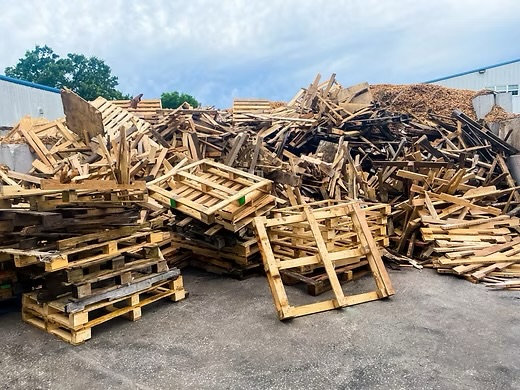
So, is wood recyclable? Usually, yes — especially if it’s clean, untreated wood that can be processed into mulch or biomass. But painted, pressure-treated, glued, or heavily finished wood usually can’t be recycled, and in Sacramento it often ends up in the landfill if it isn’t separated and handled the right way. That distinction matters for homeowners and contractors dealing with lumber, pallets, branches, fencing, or other wood debris from home improvement projects, yard cleanup, and construction work.
Sacramento’s curbside recycling bins aren’t built for lumber, pallets, or yard waste left over from those jobs; wood that size just gets pulled and sent to the landfill unless it’s handled separately. If you’re trying to figure out what wood can be recycled, what can’t, what local disposal rules apply, and whether a removal service makes more sense than hauling it yourself, this guide breaks down the options, pricing, and common questions so less usable wood waste gets buried unnecessarily.
Is Wood Recyclable or Trash in Sacramento?
It’s rarely one or the other. Untreated lumber, clean pallets, and dry branches are recyclable through Sacramento County’s construction and demolition debris program — they get chipped into mulch or processed for composite materials. Painted or treated wood, plywood with glue layers, and anything with hardware attached usually can’t go through the same process and ends up at a transfer station instead.
That’s where people get it wrong: they assume all wood is recyclable, drag it to the curb, and it either sits there or gets pulled from the load on pickup day — Sacramento’s regular trash routes don’t take lumber-sized wood. If you’re not sure, a scrap removal crew can sort it for you on-site — they deal with mixed loads every day and know what’s salvageable.
For anyone asking how to dispose of a bigger load at once — an old deck, a torn-down fence, leftover lumber from a remodel — a single bulk pickup is almost always cheaper than multiple runs to a Sacramento transfer station yourself. Most facilities charge by weight, so a truckload of wet lumber can cost more than people expect.
What Counts as Recyclable Wood (Including Untreated Wood)
Untreated lumber is the easy case — construction offcuts, pallets, fence boards that were never painted or sealed. Dry branches and yard trimmings fall into the same bucket, and yard refuse is the most common type of wood waste. Facilities can run this stuff through a chipper without worrying about what’s coating it, and the output can create useful end products such as mulch, soil conditioner, paper pulp, or biomass fuel for energy. That’s the difference between “recyclable” and “technically could be recycled but nobody wants it.”
What Ends Up as Trash or Yard Waste
Anything painted, stained, laminated, or pressure-treated usually gets rejected. Older painted wood can carry lead-based paints, and pressure-treated wood made before 2004 may contain toxic CCA compounds; those chemicals can also include mercury, which makes handling more dangerous and calls for special disposal rather than a standard bin. Recycling treated wood can be more harmful than beneficial because of hazardous chemicals. So does plywood and particleboard, since the glue holding the layers together doesn’t separate out cleanly. Nails, screws, hinges, and other hardware are a problem too — not because the wood itself is bad, but because pulling metal out of a load slows everything down. If a piece of furniture or an old fence has any of that, plan on it going to the landfill instead of the chipper.
Wood Removal Services in Sacramento
Booking a wood removal service is the least painful route once you’re past a few pieces of scrap. A crew shows up, loads everything — boards, stumps, old fencing, whatever’s left after a renovation — and hauls it straight to the right facility, whether that’s a recycling center or a certified landfill. No dumpster to rent, no separate trip across town.
What We Take
Different types of wood items — boards, stumps, fence posts, old decking, plywood, furniture frames, and even wooden toys if they’re too big or unsuitable for normal disposal — are fair game if they won’t fit in your trash can. Mixed loads are fine too; a lot of jobs come with a little bit of everything, and sorting that out is part of what the crew handles on-site.
How Pricing Works
Most wood removal is priced by how much space it takes up in the truck, not by the pound. A small project costs a lot less than a full deck teardown, and you’ll usually get a number on the spot once the crew sees what you’ve got — no guessing from a phone estimate.
Before You Haul It Away
Not everything needs to go straight to the truck. Usable lumber sometimes gets set aside and reused instead of chipped, and furniture in decent shape can often be a chance to donate reusable wood items and extend their life before disposal — worth asking your crew before they load up.
In Sacramento, yard and construction wood debris can’t legally go out with regular household trash pickup — the city’s curbside program isn’t built for it, which is exactly why a dedicated hauling service exists in the first place.
If you’re figuring out how to get rid of old furniture, a rotted shed, or a pile of fence posts, don’t mix it in with regular household debris — keeping wood out of mixed trash helps avoid illegal dumping and separate hazardous-material issues at facilities, and Sacramento facilities often reject loads that combine wood with other construction waste, meaning you’ll end up paying twice. Booking a straightforward haul-away appointment usually costs less than renting a dumpster for a one-time job, especially if the pile is under a truckload.
Frequently Asked Questions
Can I put wood in my recycling bin in Sacramento?
No — a standard curbside recycling bin or trash bin is for paper, glass, plastic, and metal, not lumber or yard wood; electronics and batteries need special handling too. Putting it out on trash day won’t get it picked up. Wood needs a drop-off facility or a hauling service so it gets properly disposed of instead of dumped illegally on a vacant lot, which does happen around Sacramento.
What happens to the wood after pickup?
It depends on condition. Clean, untreated wood typically goes to a facility that processes it into mulch, biomass, or soil products. Painted, treated, or glued wood usually ends up at a landfill, since there’s no practical way to recycle it once those materials are mixed in — around 28% of landfill material is recyclable wood waste when it’s kept clean and separated.
How much does wood removal cost in Sacramento?
Pricing is usually based on volume — how much of the truck your load fills — rather than a flat per-item rate. A handful of boards runs a lot less than a full deck or shed teardown. Most companies, us included, give a firm price on-site before any work starts.
Can I mix wood with other junk in the same pickup?
Yes, in most cases. A single appointment can cover a mix of wood, furniture, and general debris — the crew separates it after pickup. The one thing to flag ahead of time is a large amount of treated or painted wood, since some facilities have separate rules for that.
Does the crew clean up after removal?
Yes — that’s the point of booking a crew instead of doing it yourself. Our workers sweep up loose garbage and anything thrown aside, load it into the containers on the truck, and leave the area clear, not just the big pieces gone.
If your Sacramento house or job site has wood piling up, contact us or request a quote — it’s a small step that keeps debris out of the environment and supports a more sustainable community.